Christoph Fahlbusch
Native apps, systems, AI workflows, and code
Product Strategy
I led design for the transition from Wunderlist to Microsoft To Do. The migration moved users at a 99.35% success rate, retained migrated users 2.5x better than organic users, and turned a risky shutdown into a continuity problem we could design for.

Wunderlist: Designing a sunset without breaking trust
We didn't shut Wunderlist down, we turned it into the "Wunderlist Upgrade".
A shutdown feels like loss, and an upgrade has to feel like a move worth making. We couldn't force the switch to Microsoft To Do, we had to earn enough trust that people would move on their own and still believe their work was intact on the other side.
I led design for the transition across the product, partnering with engineering, research, data, and the original Wunderlist team. The move had to feel less like an eviction and more like continuity, so we stopped designing it as an export flow and started designing it as the product itself.
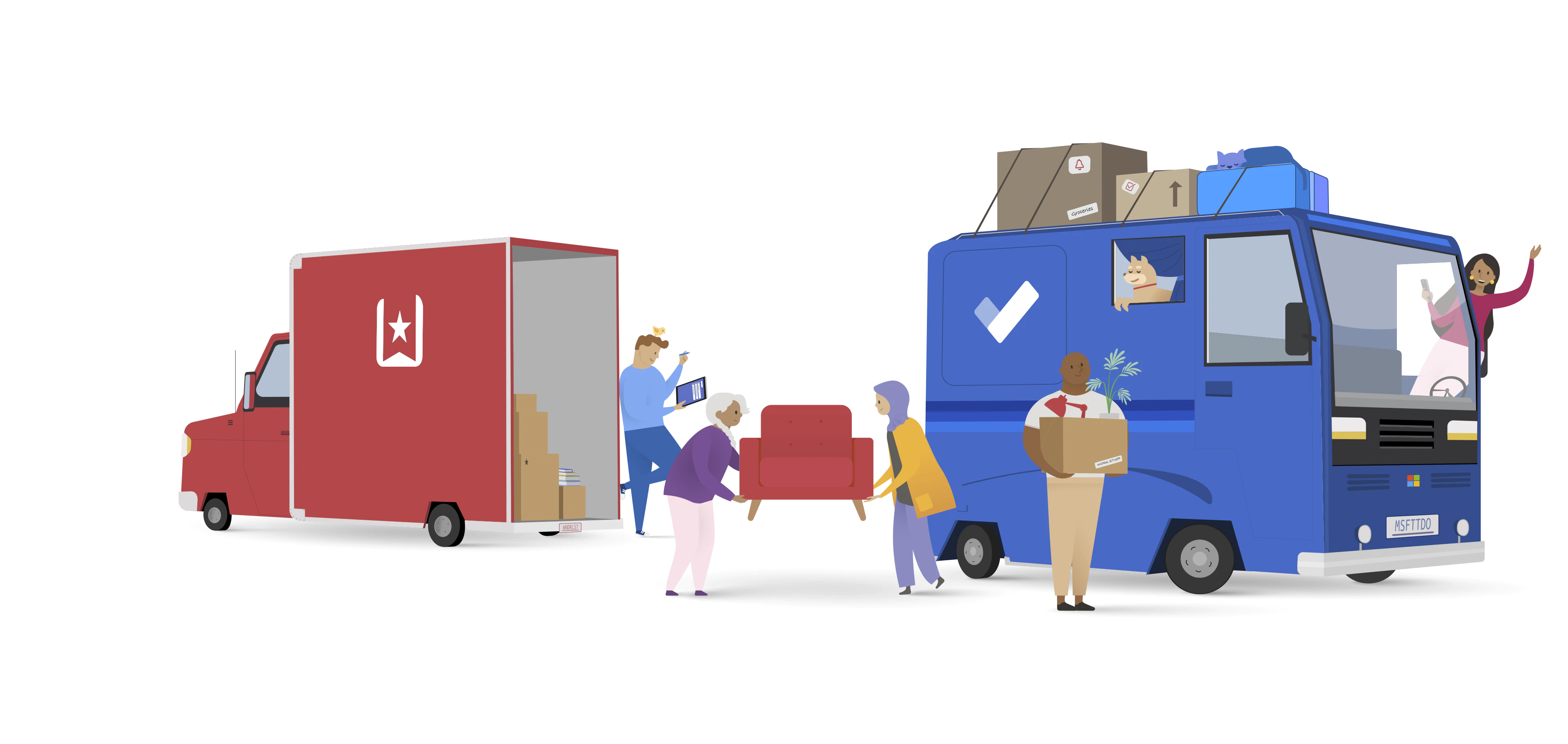
The psychology of migration
Users don't care about your roadmap as much as they care about their data.
For a lot of people, Wunderlist held years of tasks, shared lists, and the organization they trusted to run their life. Even the perception of data loss could make the whole transition feel unsafe.
So we stopped treating feature parity as the main measure of success, and focused on continuity instead.
The tension
Calling it the "Wunderlist Upgrade" helped signal continuity, while still being honest internally about how fragile the move could be.
Users don't upgrade unless they see value, and for many people, Wunderlist was already perfect. We had to show that Microsoft To Do could carry their work without making them feel like they had lost the product they trusted.
Selling the future without disrespecting the past is a tricky line to walk.
Defining the problem
Everything came back to trust because one failed import or one suspicious-looking piece of data would make users leave immediately, and we wouldn't get a second chance.
Research
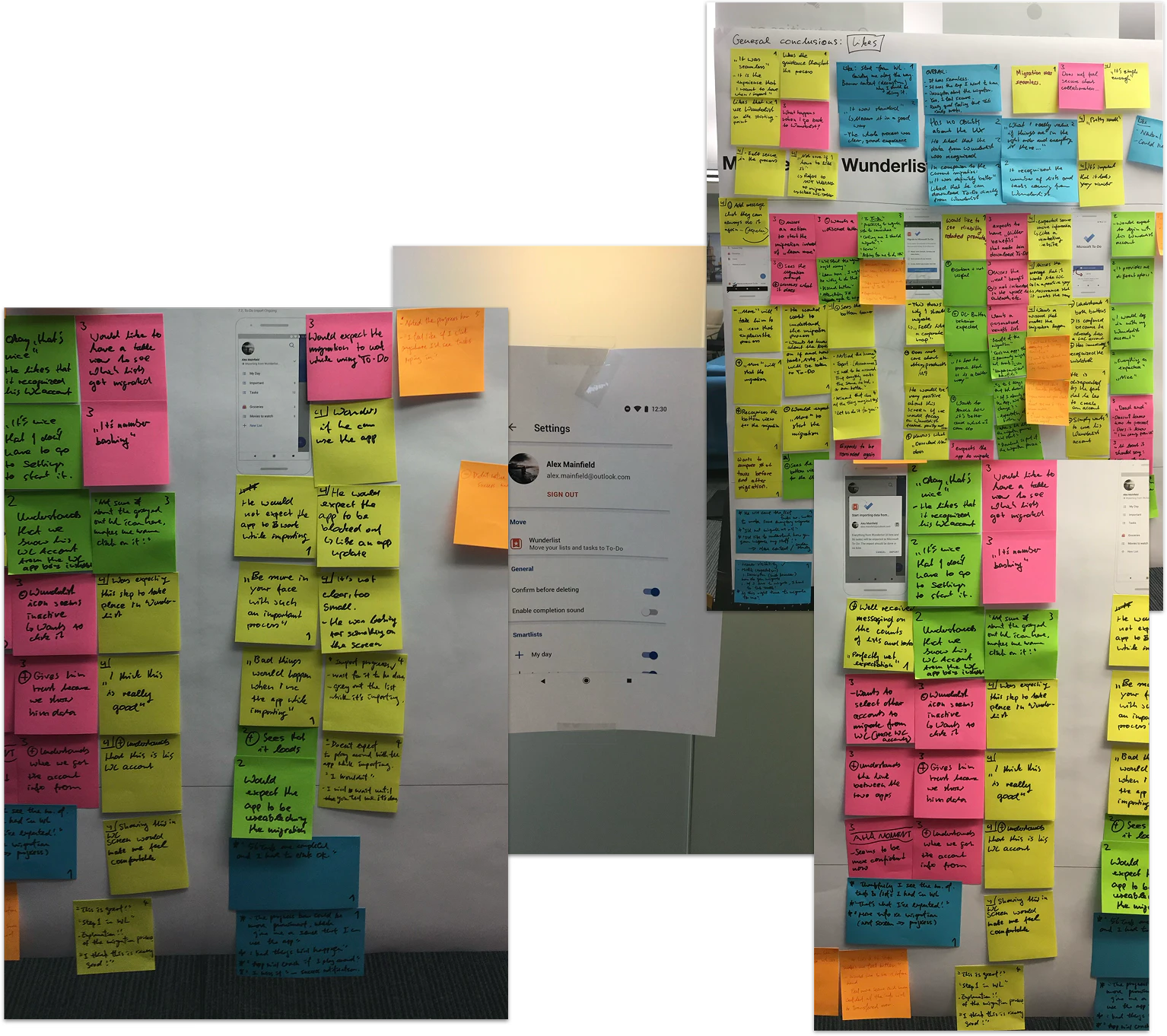
We mapped how a sunset feels for users, because they weren't only evaluating features, they were evaluating risk.
Functionality wasn't enough, because users needed reassurance through familiar list groups, background images, and organization methods reflected back at them in the new tool.
Designing for continuity
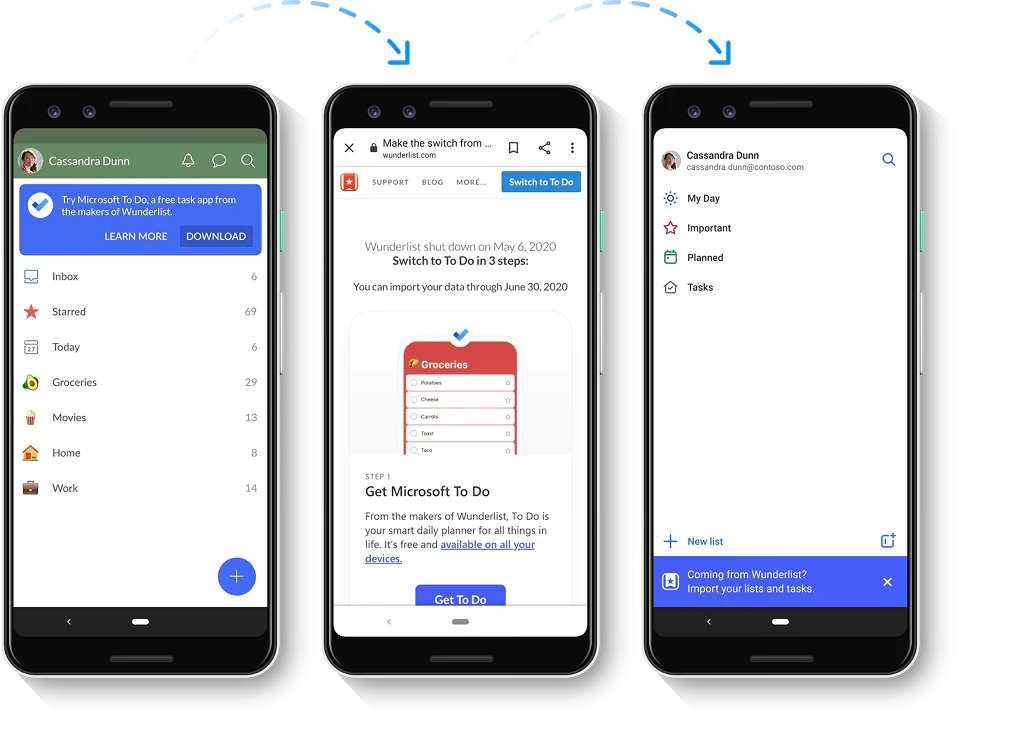
We decided to preserve the mental model, not just the data. When the importer ran, it didn't just dump tasks into a list.
It recreated the folder structure, the visual hierarchy, and even the theme settings, because if it looks like home, it feels less like the product broke under you.
The importer as a product
The importer became our most important feature, so we treated it like a product, not a utility screen.
The main path had to be one tap, with CSV exports available but clearly secondary to "Import".
We engineered it to handle edge cases, like massive accounts, broken formats, or legacy data.
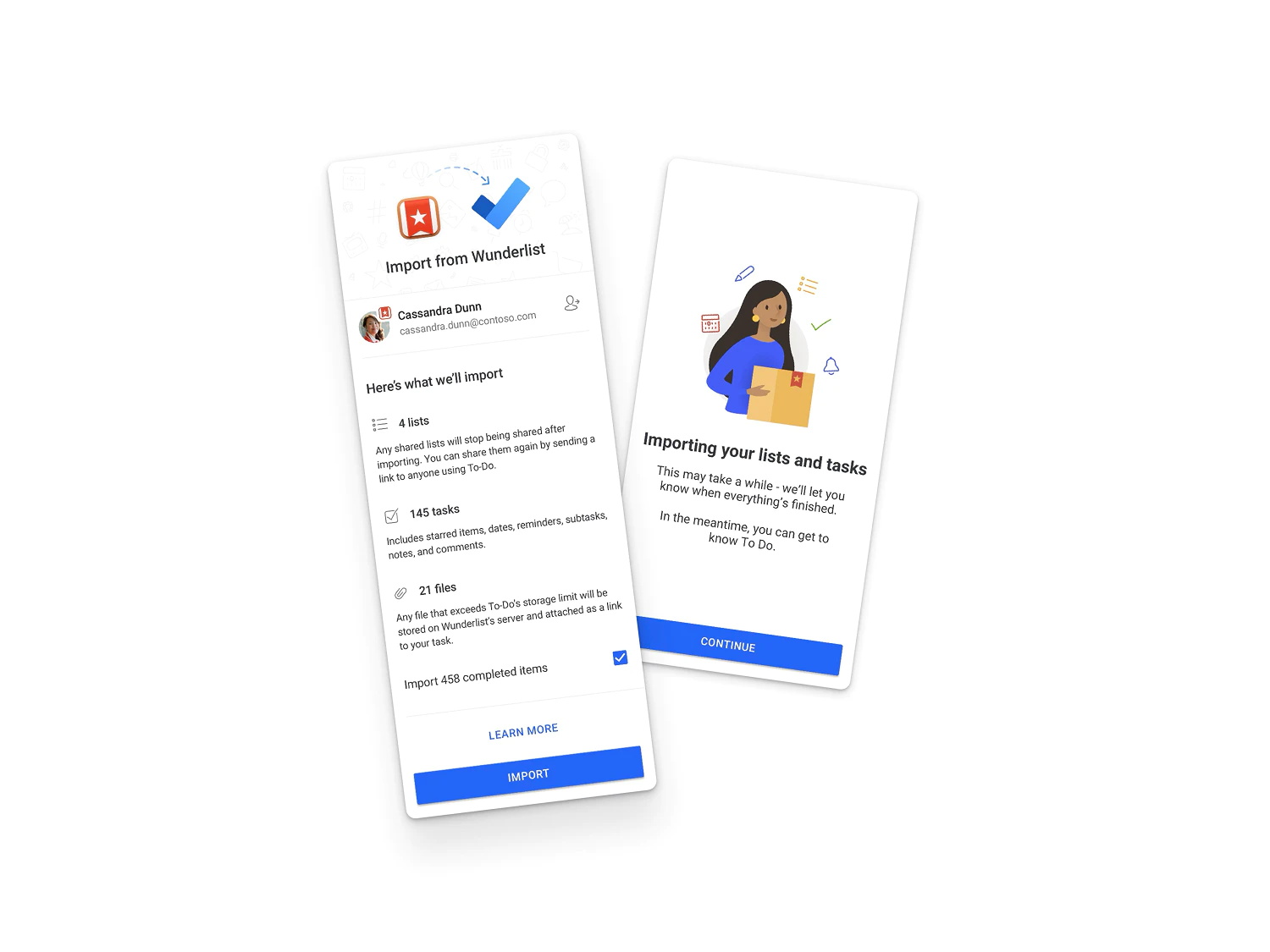
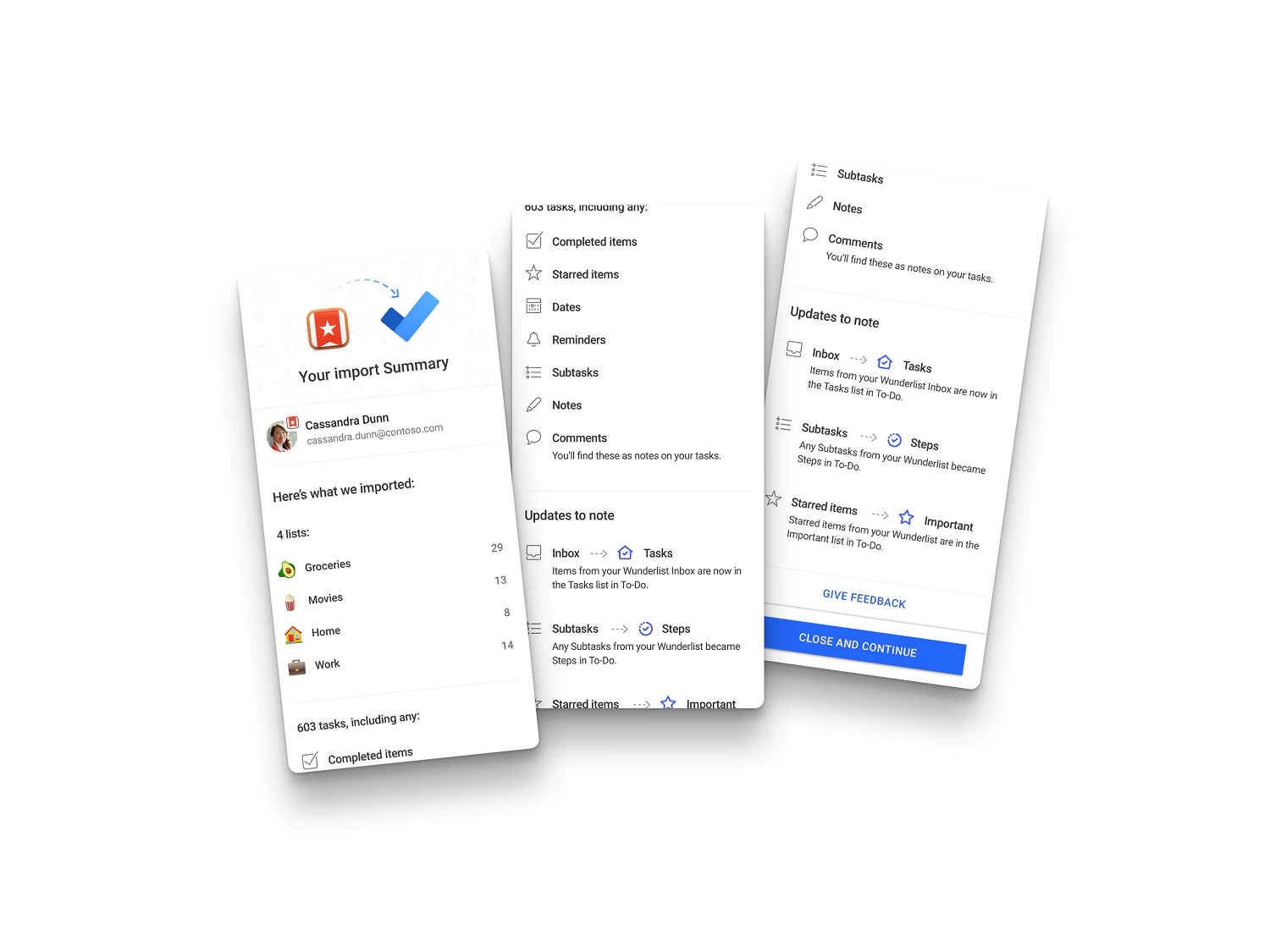
We added a detailed summary report at the end, mostly for reassurance rather than debugging. Showing exactly what had moved gave users the confidence to finally delete Wunderlist.
Trust as a metric
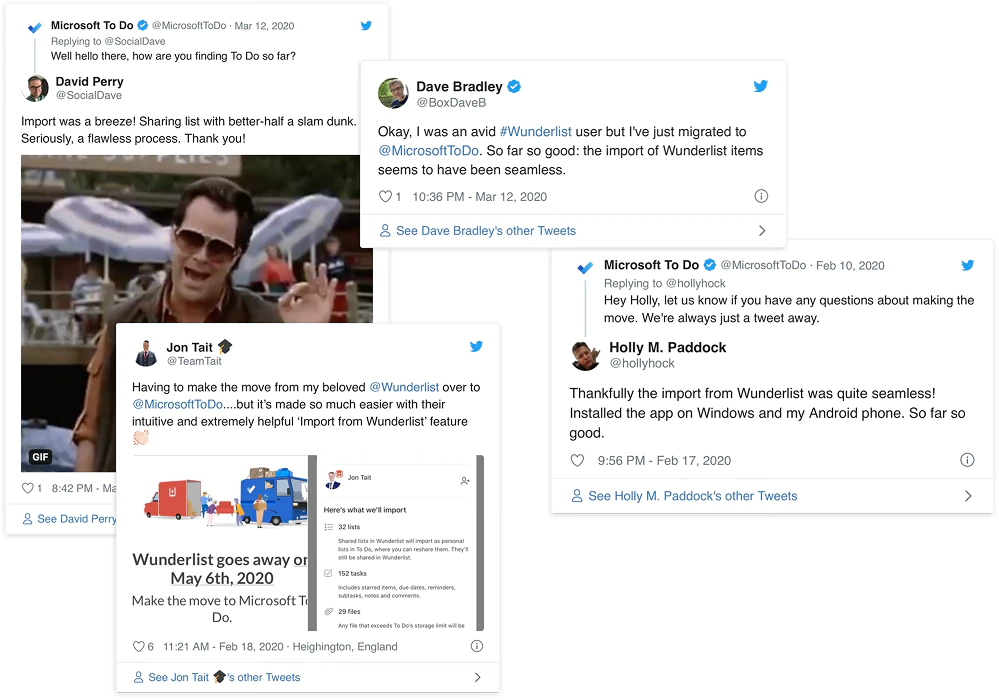
The feedback started shifting from anger to relief, with people thanking us less for the app itself and more for not breaking their workflow.
In productivity work, you're dealing with emotional infrastructure. When you change the tool, you're handling years of tasks for school, work, planning a wedding, preparing for a first child, or saving links someone needed later. To users, that isn't abstract data, it's the scaffolding of a life lived through a product.
We measured trust as a real metric. Migration completion rate, 99.35%, was the entry-level signal. The 2.5x retention difference between migrated users and organic To Do users said the trust held: these weren't users who completed a wizard and never came back. The shared-list re-sharing rate, up 25% in 30 days, showed the trust extended to other people in the user's network, which is the thing a sunset most often breaks.
Shared-list migration was just as important. We designed the badge and follow-up flow so people understood which lists needed attention after the move.
Closing
When we shut down the servers, millions of users continued their day in To Do without missing a beat.
Ending a product well is mostly a continuity problem, because if you keep the data, the structure, and the habits people had on the old tool, the transition stops feeling like a loss.
The decisive work wasn't the importer, it was the framing: naming it the "Wunderlist Upgrade" instead of a sunset, and treating the importer as a product instead of a utility. Most product transitions break trust because the team running them treats them as engineering work with a UI on top. Designing the transition as the product is what kept the trust intact.